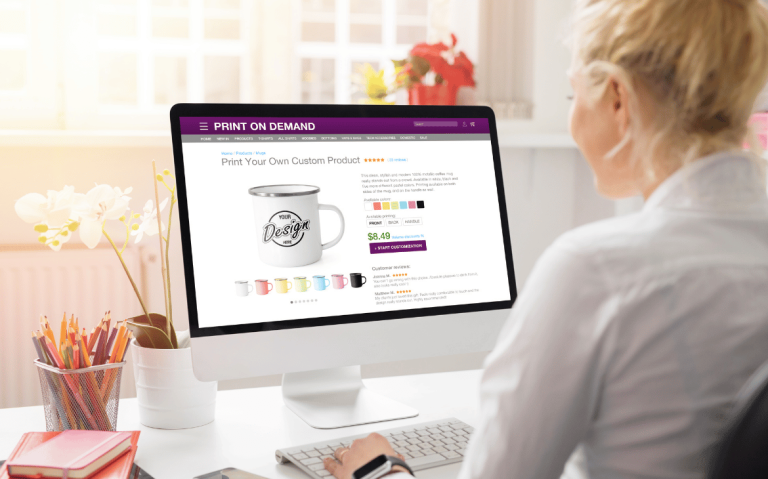
In 2025, the e-commerce industry is more competitive than ever. With thousands of online stores fighting for customer attention, a beautiful website alone isn’t enough. To drive sales and retain customers, brands need conversion-optimized e-commerce designs that focus on user experience (UX), clear navigation, and seamless checkout flows.
This article highlights the best practices for designing e-commerce websites that boost engagement, reduce bounce rates, and increase conversions in today’s fast-evolving digital marketplace.
Prioritize a Clean and User-Friendly Layout
An effective e-commerce design starts with simplicity. Overloaded pages with too many elements can confuse shoppers and hurt conversions.
Best practices:
- Use clean layouts with well-organized sections
- Highlight featured products above the fold
- Limit distractions to keep users focused on buying
- Use visual hierarchy to guide users naturally through the page
A minimal, content-focused design improves clarity and builds trust.
Optimize Product Pages for Higher Conversions
Product pages are where buying decisions happen. A poorly designed product page can drive users away, even if the product itself is great.
Key elements to include:
- High-quality images with zoom and 360° views
- Clear, persuasive product descriptions
- Trust-building elements like ratings, reviews, and social proof
- Prominent call-to-action (CTA) buttons for “Add to Cart” or “Buy Now”
Make it easy for customers to understand, trust, and purchase your products.
Simplify the Checkout Process
A complex checkout process is one of the biggest reasons for cart abandonment. In 2025, seamless, one-click checkout experiences are setting new standards.
Tips for optimizing checkout:
- Offer guest checkout to reduce friction
- Minimize the number of steps and form fields
- Provide multiple secure payment options
- Show real-time shipping costs and delivery estimates upfront
The faster and smoother the checkout, the higher your conversion rate.
Make Your Store Mobile-First
With 70% of online purchases happening on smartphones in 2025, mobile-first design is no longer optional.
Best practices for mobile commerce:
- Use responsive layouts for all screen sizes
- Optimize product images for faster mobile load times
- Ensure touch-friendly buttons and seamless navigation
- Enable mobile payment methods like Apple Pay and Google Pay
A mobile-friendly experience ensures you capture a larger audience and improve sales.
Leverage Personalization and AI Recommendations
AI-powered personalization is transforming e-commerce conversion rates. By analyzing user behavior, you can deliver tailored shopping experiences.
Examples include:
- Personalized product recommendations
- Recently viewed product sections
- Dynamic pricing based on user preferences
- Email retargeting with AI-powered suggestions
Personalization boosts engagement, trust, and customer loyalty.
Conclusion
In 2025, a conversion-optimized e-commerce design is the key to standing out in a crowded marketplace. By focusing on clean layouts, mobile-first experiences, simplified checkout flows, and AI-driven personalization, brands can create seamless shopping journeys that attract, engage, and convert visitors into loyal customers.
The future of e-commerce success lies in designing for the user first — because better experiences lead to better conversions.