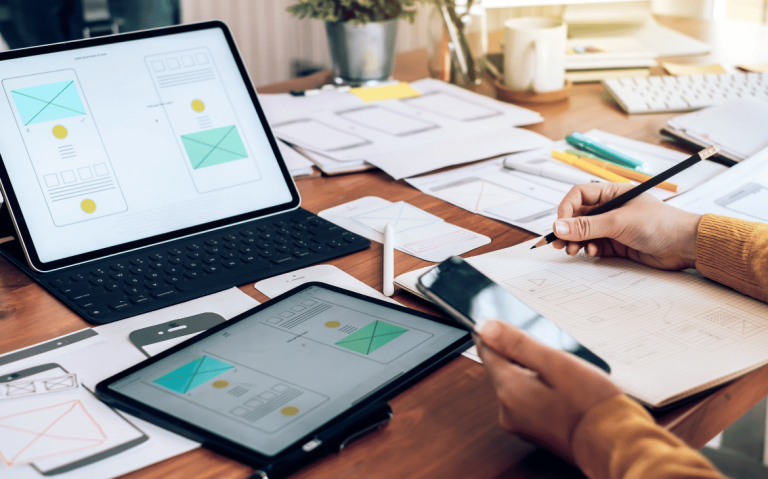
Flat design took the digital world by storm with its simplicity, clarity, and minimal aesthetic. But as user expectations evolved, designers realized that completely flat visuals sometimes lacked hierarchy, emotion, and intuitiveness. This led to the rise of Flat Design 2.0, a modern approach that blends minimalism with subtle depth, shadows, highlights, and textures to create cleaner yet more engaging interfaces.
In 2025, Flat Design 2.0 is the preferred visual language in UI/UX because it offers the best of both worlds — the simplicity of flat design and the realism of dimensional elements. This combination improves usability while maintaining aesthetic balance.
What Is Flat Design 2.0?
Flat Design 2.0, also known as semi-flat design, evolved from the original flat design trend. While the first version focused on purely flat elements, Flat Design 2.0 introduces:
- Soft shadows
- Subtle gradients
- Layered elements
- Micro-textures
- Depth cues
The goal is to keep designs clean and modern while adding visual hierarchy and interactive cues that improve the user experience.
Why Texture and Depth Matter
Flat visuals can sometimes confuse users, especially when interactive elements (like buttons or cards) don’t look clickable. Texture and depth solve these issues by offering:
a) Better Usability
Depth signals interactivity. Shadows beneath buttons, raised surfaces on cards, and layered modals instantly show users where to click or focus.
b) Enhanced Visual Hierarchy
Depth helps important elements stand out. Designers can guide attention by adjusting layering, contrast, and texture.
c) More Emotional Engagement
Human eyes naturally respond to dimensional visuals. A bit of texture can make a digital interface feel more welcoming and tactile.
d) Modern Aesthetic Appeal
Subtle gradients and shadows bring sophistication to minimal layouts, making them feel polished and premium.
Key Techniques Used in Flat Design 2.0
a) Soft Shadows
Using natural, diffused shadows creates depth without overwhelming the flat aesthetic. These shadows typically have low opacity and large blur values.
b) Layered Cards and Panels
Card-based layouts gain clarity when stacked elements create a sense of layering. This improves scanning and reinforces content structure.
c) Micro-Gradients
Unlike the bold gradients of earlier design trends, Flat Design 2.0 uses subtle gradients to add smooth texture to icons, buttons, and backgrounds.
d) Glassmorphism and Frosted Effects
Light transparency effects create depth while maintaining the clean look of flat design.
e) Light-Texture Surfaces
Minimal textures (like grain, noise, or soft patterns) give surfaces a tactile feel and add warmth to otherwise plain sections.
Where Texture and Depth Are Most Effective
- Buttons and CTAs → Depth encourages interaction
- Navigation bars → Texture separates sections subtly
- Cards and product tiles → Improved readability and grouping
- Onboarding illustrations → Adds approachability
- Backgrounds → Light gradients or grain make layouts feel less empty
These enhancements help users visually understand structure and function instantly.
Flat Design 2.0 in 2025: The Perfect Balance
Modern users want interfaces that are:
- Clean
- Intuitive
- Visually rich
- Lightweight and fast
Flat Design 2.0 meets these expectations by enhancing minimalism with purpose-driven detail. Designers use depth and texture not as decorations but as functional tools that improve clarity and interaction.
This is why tech giants like Google, Apple, and Stripe continue to embrace semi-flat design principles — it is both modern and user-friendly.
Conclusion
Texture and depth play a critical role in the evolution of Flat Design 2.0. By adding subtle shadows, gradients, and layers, designers can elevate usability, guide user attention, and create interfaces that feel modern, meaningful, and engaging.
The future of design lies in striking the perfect balance — minimal, yet dimensional; simple, yet expressive. Flat Design 2.0 achieves that beautifully.